You finally install that beautiful shade over your patio, ready for perfect summer weekends. But a few seasons later, the fabric looks faded, the arms squeak, and you are staring at unexpected wear.
You might find yourself asking yourself, “what is the lifespan of an awning?” The truth is, how long it survives depends entirely on your daily habits. So, how long should a new awning last? With proper care, a new awning can easily give you five to fifteen years of comfort.
Here is the good news. Most premature failures have nothing to do with bad luck. They happen because of completely avoidable mistakes. Let us explore the six common blunders that quietly destroy your investment so you can protect your patio.
What Actually Affects Awning Lifespan
Before we dive into the mistakes that damage a new awning, let us talk about the baseline. You cannot just bolt a frame to your house and expect it to survive the next decade without knowing what it is up against.
Several factors decide how long your shade stays functional before you even make a single mistake:
- The fabric and frame: Your choice of awning material plays a massive role. Classic canvas looks gorgeous but often taps out around eight years. Vinyl pushes past fifteen. Metal options can sometimes outlast your mortgage.
- Where you live: The climate does not care about warranties. If you live where the wind regularly tries to send your patio chairs into the neighbor’s yard, or the summer sun bakes everything in sight, your shade is working overtime just to exist.
- How it was installed: The best hardware in the world will fail if the pitch is wrong. A bad angle lets water pool, while a crooked mount grinds the motor. When it comes to new awnings, the quality of the installation dictates whether you get fifteen years or fifteen months of comfort.
- How you use it: Buying new awnings feels great. But leaving them extended during every single storm is a fast track to broken arms and stretched fabric.
Now that you know what builds a strong foundation, let us look at the habits that quietly tear it down.
Mistake #1: Retracting a Wet Awning
A sudden afternoon thunderstorm rolls in while you are enjoying a cold drink on the patio. Your first thought is to grab the remote and roll up the fabric to keep it safe from the heavy rain. It feels like the right thing to do at the right time.
Actually, that is not how it works.
When you roll up wet fabric, you are creating a dark and damp burrito attached to your house. All that trapped moisture has absolutely nowhere to go. Give it a few days in the summer heat, and you have just built a five star luxury resort for mold, mildew, and rot. When frustrated homeowners call and ask, “why does my awning wear out quickly,” this is almost always the silent culprit.
The resulting awning wear and tear is not just an ugly green stain you can easily scrub off on a Saturday morning. That trapped moisture actually breaks down the protective coatings, weakens the threads, and destroys the fibers. And before long, the material rots right through.
The good news is that the fix requires zero tools. The absolute best way to prevent awning damage is simple patience. If the fabric gets wet, just leave it fully extended until the sun comes out and bakes the moisture away. If heavy winds force you to retract it during a severe storm, that is perfectly fine. Just make a mental note to unroll it the very next morning so it can air out completely.
Mistake #2: Leaving It Open in Wind and Storms
You might love a brisk afternoon breeze, but your patio shade? Definitely not.
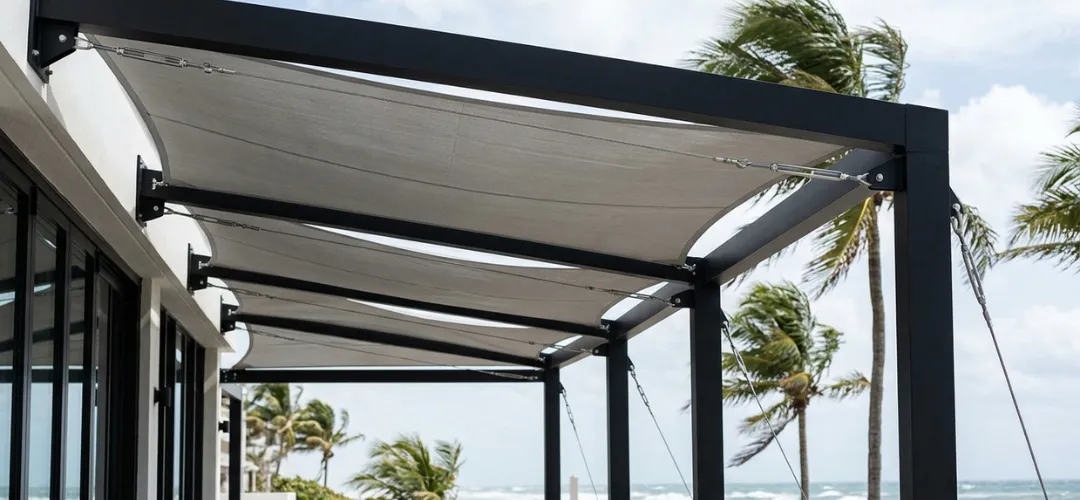
Leaving the fabric extended when wind speeds climb over 20 to 25 mph is exactly what shortens awning lifespan faster than anything else. Your setup is designed to block the sun, not act as a giant sail. Those strong gusts put immense structural stress on the entire unit, frequently resulting in permanently bent arms and expensive ripped fabric.
If you want to maintain a perfect awning condition year after year, you have to know when to pack it in. Here are the best habits to keep your shade safe when the weather turns angry:
- Manually retract early: If the wind feels strong enough to blow over a heavy patio chair, hit the retract button immediately.
- Install a smart wind sensor: This brilliant little device detects heavy motion and rolls the fabric up automatically.
- Never trust the forecast completely: Summer storms pop up out of nowhere, so always roll it away if you are leaving the house.
Relying on a smart sensor is arguably the easiest way to prevent awning damage without constantly playing meteorologist. Just remember that technology can sometimes lose power or get dirty, so maybe keep a watchful eye on the sky.
Mistake #3: Using the Wrong Cleaning Methods
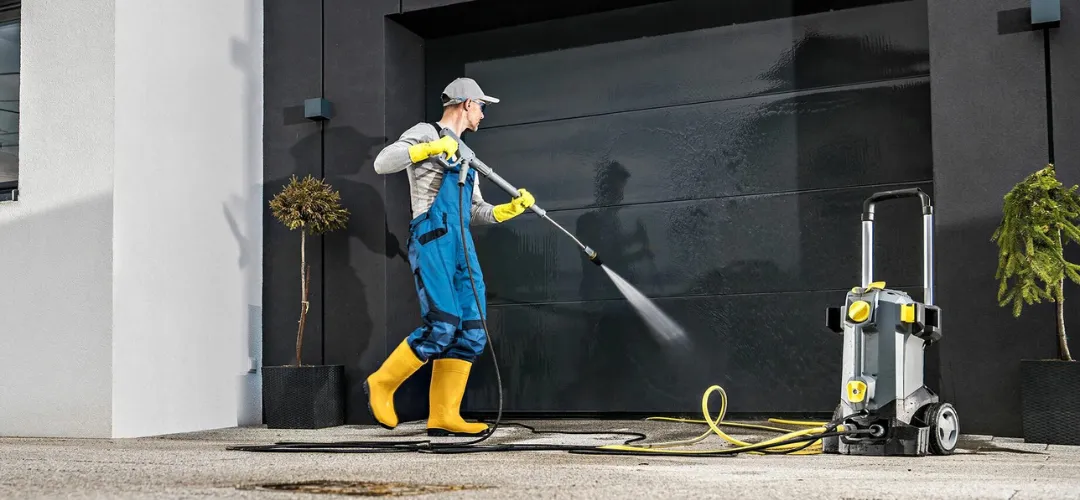
You look up one weekend and notice a thick layer of pollen, bird droppings, and mystery grime on your patio shade. Your first thought? Fire up the pressure washer or grab the strongest bottle of bleach under the sink. It makes sense in theory, but blasting your fabric with high pressure or harsh chemicals is a sure way to disaster
What started as an innocent attempt at regular awning maintenance can quickly turn into an expensive call for awning repair. You are not trying to blast peeling paint off a driveway; you are washing a specially treated outdoor textile. Treating it like a concrete sidewalk will leave you with a faded, leaky mess before the summer even ends.
Proper awning cleaning is actually a lot less dramatic and requires far less machinery. Here is the foolproof way to keep your fabric looking brand new without ruining the material:
- Sweep it first: Use a standard broom to knock off loose dirt, cobwebs, and leaves before you ever turn on the water.
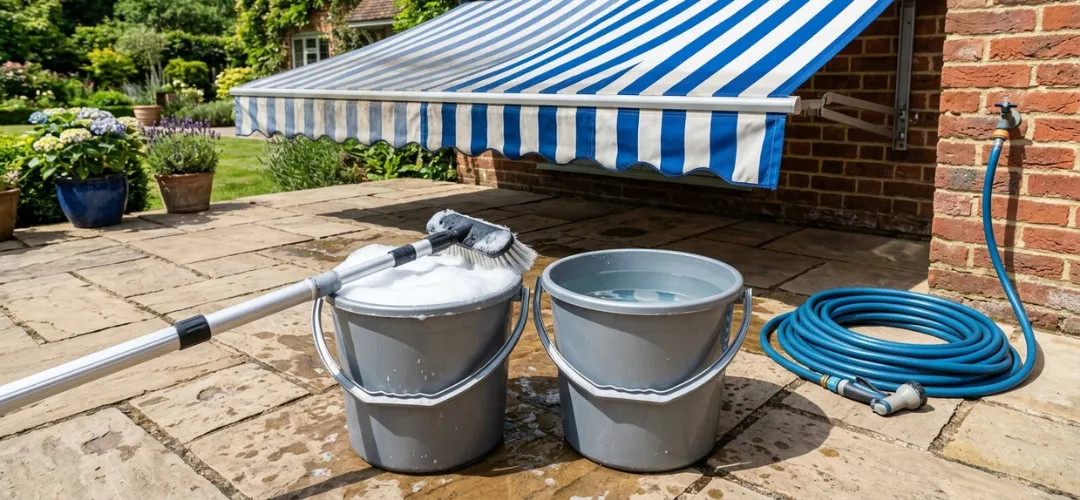
- Keep it gentle: Mix a little mild dish soap with lukewarm water and use a soft-bristle brush to gently lift stubborn stains.
- Rinse lightly: Skip the aggressive power washer entirely and just use your standard garden hose to wash the soap away.
Mistake #4: Skipping Regular Maintenance
You finally got that gorgeous shade installed, and it works perfectly. So perfectly, in fact, that you completely forget about the hardware holding it together. It is easy to assume that once it goes up, your job is done. But ignoring the quiet squeaks, the slightly loose bolts, or that tiny frayed edge on the fabric is a guaranteed way to accelerate awning wear and tear.
Small issues do not fix themselves; they just invite bigger, more expensive problems. A loose bracket forces the motor to work harder, while a tiny tear in the fabric turns into a massive rip during the next windy afternoon. Skipping basic awning maintenance is what turns cheap, five-minute fixes into total system failures that will cost you hundreds of dollars.
You do not need a degree in engineering to prevent awning damage. Just add a quick visual inspection to your seasonal yard chores:
- Check the hardware: Grab a wrench twice a year and make sure all the nuts, bolts, and brackets are actually tight.
- Inspect the frame: Look closely for early signs of rust, corrosion, or bending in the retractable arms.
- Scan the fabric: Catch tiny tears, loose stitching, or fraying edges early before they have a chance to spread across the canvas.
Mistake #5: Ignoring Water Pooling and Poor Pitch
Imagine sitting under your shade during a light summer drizzle, only to watch a mini-lake forming right above your head. That sagging belly of water happens because of a bad “pitch.” In simple terms, pitch is just the downward angle of your fabric. If the setup is too flat, water forgets gravity exists and decides to hang out on your canvas instead of rolling off the edge.
Letting that puddle sit there is a guaranteed recipe for accelerated awning wear and tear. Water is shockingly heavy; just one gallon weighs over eight pounds! That constant dead weight stretches the fabric permanently, bows the metal arms, and puts immense stress on your mounting brackets. Before long, your pristine setup looks like a drooping parachute, and the overall awning condition goes from a backyard highlight to a structural hazard.
The good news is that you do not need to replace the whole unit to prevent awning damage. You just need to give gravity a little help by fixing the angle:
- Adjust the slope: Most modern units have simple built-in pitch adjustments on the arms. Lower the front edge to create a steeper drop so rain naturally glides right off.
- Test it out: The next time it rains lightly, step outside with a cup of coffee and make sure the water is actually draining away quickly.
- Don’t force it: If the arms refuse to budge or you are unsure how to change the settings, call a professional to dial in the perfect angle before the weight snaps a bracket.
Mistake #6: Delaying Small Repairs
You notice a tiny snag in the fabric or hear a faint clicking sound when the motor runs. It is so small you tell yourself you will handle it next weekend. Then next weekend turns into next month. Before you know it, that minor flaw has turned into a complete disaster.
Small issues do not fix themselves. A tiny tear the size of a dime will catch the wind and rip entirely across the canvas during a sudden afternoon storm. What could have been a cheap patch job suddenly requires a total fabric replacement, completely ruining your overall awning condition.
If you want to prevent awning damage from spiraling out of control, tackle these minor hiccups the exact moment you spot them:
- Patch tiny tears immediately: Use outdoor fabric tape or a specialized patch kit before the wind gets hold of the hole and pulls it apart.
- Listen to the motor: If it sounds like it is struggling or grinding, stop using it and call a professional before the whole system burns out.
- Tighten loose hardware: A quick turn of a wrench keeps the metal frame aligned and stops uneven wear in its tracks.
Simple Habits That Extend the Life of a New Awning
If you find yourself wondering exactly how do you maintain a new awning without making it a part-time job, the answer comes down to just a few easy routines. You can keep your outdoor space looking perfect year after year by following these practical awning longevity tips:
- Dry before retracting: Always let the fabric air out completely in the sun after a rainstorm to stop mold, mildew, and rot before they ever start.
- Clean gently: Skip the harsh chemicals and aggressive power washers. A soft-bristle brush, mild dish soap, and a standard garden hose are all you need to lift dirt safely.
- Do seasonal inspections: Take five minutes twice a year to tighten loose bolts, check the metal arms for rust, and spot tiny fabric snags before they grow.
- Store properly for winter: Freezing weather destroys canvas and motors. If you live in a cold climate, use a protective winter cover to shield the retracted unit from heavy snow and ice.
- Adopt smart usage habits: Never leave the shade extended when you leave the house. Retract the unit manually when heavy winds pick up, or install a smart wind sensor to handle the job automatically.
Enjoy Your Patio for Years to Come
Getting a new awning is a fantastic upgrade for your backyard, but keeping it in perfect shape requires a little mindfulness. By simply letting the fabric dry completely, retracting it during heavy winds, and staying on top of gentle cleaning and minor repairs, you can easily avoid the most common pitfalls.
If you want to make sure your outdoor shade stays flawless, our team is ready to help. The Awning Cleaners provides professional awning services, helping you easily install, maintain, and repair your awning so you can get the absolute most out of your patio all year round.