You walk outside on a sunny morning, look up at your patio awning, and notice it. A tear in the fabric. A sagging corner. Maybe the motor stopped working halfway through retracting. Your first thought is probably dread, followed quickly by “How much does it cost to fix an awning?”
Here is the good news. Awning repair is almost always cheaper than buying a whole new unit, often by a staggering 60%. The reason is simple. The most expensive parts of your awning are the metal frame, the motor, and the mounting hardware, and those usually outlast the fabric by years. Why replace everything when only one piece is broken?
This guide walks you through why deciding to repair awning instead of replacing makes financial sense, what common fixes actually cost, when should you repair an awning instead of replacing it, and how to know when replacement is the smarter call.
The Short Answer: Why Repair Usually Saves You 60%
Let us get straight to the number you came for. How awning repair saves money compared to buying new awning comes down to one simple fact. You already own the expensive parts.
A brand new awning can run anywhere from $1,200 to $6,000 depending on size, material, and whether it is motorized. That cost includes the aluminum frame, the fabric, the mounting hardware, the motor or manual arms, and installation labor. Now ask yourself this. If your frame is still straight and your motor still works, why would you pay for those parts again?
Here is the math that matters.
| Option | Typical Cost Range | What You Pay For |
| Full awning replacement | $1,200 – $6,000 | Frame + fabric + motor + hardware + installation |
| Fabric only replacement | $350 – $1,200 | New fabric + labor to swap it |
| Minor tear repair | $10 – $30 | Patch kit or tape |
| Motor replacement | $285 – $625 | Just the motor, keep everything else |
| Hardware fix (remote, gear, arm) | $35 – $300 | Single component only |
The pattern is obvious. Save money with awning repair instead of replacement by targeting only what is broken. The frame and motor carry the highest replacement costs, but they are also the longest lasting parts. Fabric wears out first. Hardware fails occasionally. But the backbone of your awning often has years of life left even when the cover looks terrible.
Think of it like a car. If your tire goes flat, you do not buy a whole new vehicle. You replace the tire. The same logic applies here. Cost of awning repair is almost always a fraction of full replacement, and that gap is where your 60% savings live.
How an Awning Works (and Why That Matters for Your Wallet)
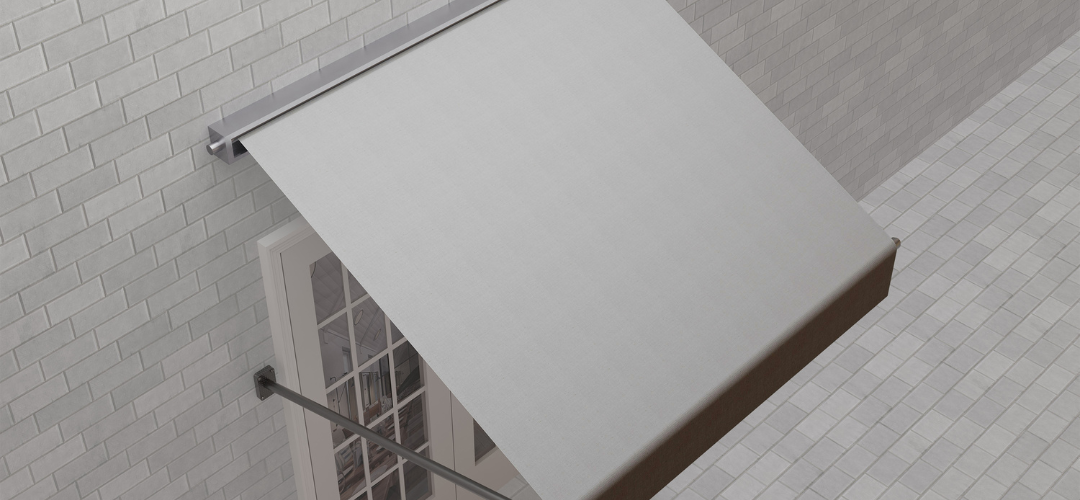
Before we talk about saving money, you need to know what you are actually paying for. An awning has three main parts, and understanding them explains why repair is so much cheaper than replacement.
The Frame (The Skeleton)
This is the aluminum or steel structure that holds everything up. It attaches to your house, supports the fabric, and bears the weight of wind, rain, and snow. Frames are built to last and a good quality aluminum frame can easily survive 15 to 25 years. Unless it is bent, cracked, or corroded, your frame does not need replacing. This is the single biggest reason to repair instead of buying new. You already own the expensive skeleton.
The Motor or Arms (The Muscle)
For retractable awnings, this is either an electric motor (motorized) or a set of manual arms with springs (manual). The motor costs $285 to $625 to replace. The arms and gears cost $35 to $300 to fix. But here is the key. These parts fail sometimes, but they fail less often than fabric. A motor that burns out after eight years does not mean your whole awning is trash. Swap the motor. Keep the rest.
The Fabric Cover (The Skin)
This is what you actually see. The fabric takes a beating every single day. UV rays, rain, wind, bird droppings, tree sap, and temperature swings. Acrylic fabric lasts 8 to 12 years. Vinyl lasts 10 to 15. Polyester is somewhere in between. The fabric is almost always the first thing to go, which is perfect because it is also the cheapest part to replace. A full fabric swap runs $350 to $1,200, far less than a $3,000 new unit.
Answering “how awning works” is simple. The skeleton holds up the skin, and the muscle moves it. When the skin wears out, you do not throw away the skeleton. You just recover it. That is where the 60% savings come from.
Awning Repair Cost Breakdown: Where the Savings Actually Come From
Now that you understand the three main parts of an awning, let us talk dollars. The table below shows what each common repair typically costs compared to a full replacement.
| Repair Type | Typical Cost Range | Savings vs. Full Replacement |
| Full awning replacement | $1,200 – $6,000 | 0% (baseline) |
| Fabric only replacement | $350 – $1,200 | 60% to 80% |
| Motor replacement | $285 – $625 | 75% to 90% |
| Awning frame repair | $300 – $500 | 85% to 90% |
| Lateral arm repair | $110 – $300 | 90% to 95% |
| Remote control replacement | $35 – $80 | 98%+ |
| Worm gear replacement | $100 – $300 | 90% to 95% |
| Small tear patch | $10 – $30 | 99%+ |
Fabric Only Replacement (the biggest saver)
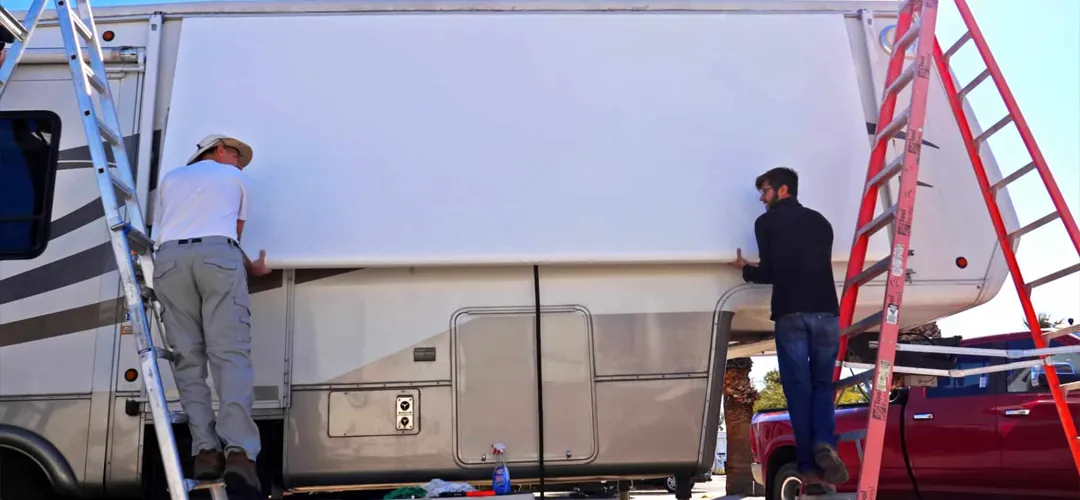
This is where the 60% figure comes from. Swapping just the fabric costs a fraction of a full unit because you reuse the frame, motor, and mounting hardware. Material choice shifts the price: vinyl runs $200 to $400, acrylic coated polyester runs $150 to $250, and cotton canvas runs $100 to $200. Even at the high end, you are still saving thousands.
Damaged Awning Fix for Small Problems
Not every repair requires professional help. Torn awning fabric under two inches can be patched with UV resistant tape or a vinyl patch kit for $10 to $30. Worn seams can be restitched with heavy marine grade thread for under $20. These quick fixes cost practically nothing compared to a new awning.
When the Frame Needs Attention
Awning frame repair is less common but still cheaper than replacement. A bent lateral arm costs $110 to $300 to fix. A loose mounting plate runs $100 to $200. Even a significantly damaged frame can often be repaired for $300 to $500, far less than the $1,200+ you would spend on a whole new structure.
What Is the Typical Lifespan of an Awning?
Here is a question every awning owner asks eventually. What is the typical lifespan of an awning? The answer depends entirely on what it is made of and how well you maintain it.
| Awning Material | Typical Lifespan | Notes |
| Acrylic fabric | 8 to 12 years | Fades faster than vinyl but breathes well |
| Vinyl | 10 to 15 years | Resists moisture and mold, less breathable |
| Polyester | 8 to 10 years | Mid range option, prone to UV damage |
| Aluminum | 15 to 25+ years | Metal, not fabric. Almost never needs replacement |
| Polycarbonate | 10 to 15 years | Rigid, not retractable |
So how often do awnings need to be replaced? The honest answer is not as often as most people think. The fabric wears out every 8 to 15 years. That is normal. But the frame and motor can easily last 20 years or more. Replacing the whole awning just because the fabric is faded or torn is like scrapping a car because the floor mats are dirty.
Rule of Thumb
Here is the rule of thumb that professional awning companies use. If the cost of repairing your awning exceeds 50% of the price of a brand new unit, replace it. If it is less than 50%, repair it. For most homeowners, the repair cost falls well below that threshold. Signs your awning can be repaired instead of replaced include an intact frame, localized fabric damage, a motor that still runs, and an age under 15 years for the hard parts.
The exception is when the frame is bent or rusted, or when the motor has failed multiple times. In those cases, replacement starts to make sense. But for the vast majority of torn fabric and minor hardware issues, repairing is the smarter financial move by a long shot.
A Quick Awning Buying Guide (If You Do Replace)
Sometimes replacement is unavoidable. The frame is bent. The motor has died twice. The fabric is beyond saving. If that is your situation, here is an awning buying guide to help you spend wisely.
- Frame material first. Aluminum is lighter and rust proof. Steel is stronger but heavier and prone to rust. For most homes, aluminum is the better choice.
- Fabric matters for longevity. Acrylic lasts 8 to 12 years and resists fading. Vinyl lasts 10 to 15 years but can crack in cold weather. Pick based on your climate.
- Manual vs. motorized. Manual awnings cost less upfront and have fewer parts to break. Motorized awnings are convenient but add $300 to $1,000 to the price and introduce motor repair costs down the road.
- Size correctly. Measure your space twice. An awning that is too small offers no shade. One that is too large puts stress on the frame and mounting hardware.
- Check the warranty. Many brands offer 5 years on fabric and 10 years on the frame. A longer warranty usually means better quality.
But before you buy anything new, ask yourself one more time. Have you gotten a repair quote? Many homeowners skip straight to replacement without knowing that a $400 fabric swap would have solved everything.
Let the Pros Handle the Repair
Not every awning fix is a weekend DIY project. At The Awning Cleaners, we provide professional awning repair services for fabric tears, window units, and retractable systems.
Frequently Asked Questions
1. How much does awning repair cost?
Awning repair typically costs between $10 and $1,200 depending on the issue, with most common fixes being far cheaper than full replacement.
2. Is it cheaper to repair or replace an awning?
In most cases, repairing an awning is 60% to 90% cheaper than replacing it entirely.
3. Can a torn awning fabric be repaired?
Yes, small tears can be patched easily, while larger damage can be fixed with fabric replacement.
4. How long does an awning repair last?
A proper repair can extend your awning’s life by several years, especially if the frame and motor are still in good condition.
5. When should you replace an awning instead of repairing it?
You should consider replacement if the frame is severely damaged, rusted, or if repair costs exceed 50% of a new awning.