You finally saved up for that gorgeous new patio awning you’ve been dreaming about all winter. You find a style you love, click buy, and it looks flawless on day one. But what that canopy looks like on day one tells you absolutely nothing about year four.
While your awning turns into a torn, sagging, rusted eyesore, your neighbor’s patio looks brand new for over a decade.
The difference isn’t just luck or how often it rains. The line between an awning that lasts 3 years and one that thrives for 15 years comes down to a few critical building choices made behind the scenes. This guide breaks down the 7 structural durability factors that decide the true awning lifespan, helping you shop smart so you don’t waste your money.
1. Frame Material: Aluminum vs. Cheap Plastics and Thin Steel
The skeleton of your shade system handles all the heavy lifting. When strong winds kick up unexpectedly, a weak frame will bend like a cheap umbrella. Cheap units use thin steel that rusts the second the coating scratches, or plastic joints that snap under pressure.
To get a true 15-year awning, you want a frame made of thick, powder-coated aluminum. It is lightweight, completely immune to rust, and naturally flexes without breaking when nature throws a tantrum.
| Frame Material | Expected Lifespan | Rust Resistance | Wind Performance |
| Thin-Gauge Steel | 2–4 Years | Low (Rusts quickly) | Poor (Bends easily) |
| Plastic/PVC Components | 1–3 Years | High | Very Poor (Snaps) |
| Powder-Coated Aluminum | 12–15+ Years | Excellent (Immune) | Outstanding |
2. Fabric Engineering: Solution-Dyed Acrylic vs. Polyester
Ever see a shade canopy that looks completely washed out, grey, and paper-thin after one summer? That is the result of using cheap polyester. The sun literally bakes the strength right out of the material until it rips like tissue paper.
The gold standard for a long-lasting patio canopy is solution-dyed acrylic fabric. Instead of printing the color onto the top layer, the color is mixed directly into the liquid fibers before they are even spun into yarn.
- UV Resistance: It blocks out harmful rays without fading or breaking down structurally.
- Moisture Defense: The material naturally repels water, preventing heavy puddles from stretching the fabric out of shape.
- Mildew Prevention: It dries rapidly, which keeps nasty mold and rot from eating away at the seams.
3. Arm Assembly and Spring Tension Systems
If you are looking at a retractable awning option, the arms are the most common point of total system failure. Cheaper awnings use simple rubber bands or light cables inside the arms to push the fabric out. Over time, these lose tension, leaving you with a saggy awning that collects rainwater.
High-end patios rely on heavy-duty, dual-cable configurations or industrial-grade chain links inside the arms. These heavy-duty springs maintain intense, consistent tension for thousands of open-and-close cycles.
If you are wondering how to choose an awning that lasts, look closely at the elbow joints of the arms. If those joints look thin or are held together by plastic caps, step away. You want solid forge-aluminum joints that can take a beating from the wind.
4. Thread Quality and Seam Construction
It sounds minor, but the thread holding the entire canopy together usually fails long before the actual fabric does. Standard sewing thread rots quickly under constant exposure to rain, pollution, and intense afternoon heat. Once the top seam splits, the whole cover catches the wind like a sail and tears away.
Premium manufacturers use specialized PTFE (Teflon-based) thread. This specific material is completely immune to UV rays, acid rain, and extreme temperature swings.
What to look for: Check if the seams are chemically welded or double-stitched with marine-grade thread. If the stitching looks like something on a cheap pair of jeans, it won’t survive five winters.
5. Mounting Hardware and Brackets
An awning is only as strong as the wall it is attached to. A heavy gust of wind applies hundreds of pounds of lifting force to the structure. If the brackets are small or made of cheap pot metals, they will rip right out of your siding, causing massive damage to your home.
This is a major structural durability factor that people skip during a backyard awning comparison. Heavy-duty installations require thick structural steel wall brackets and heavy masonry or wood sleeve anchors.
- Lag Bolt Depth: Fasteners must penetrate deep into the solid structural framing studs of your house, not just the outer brick facade or drywall.
- Bracket Count: Long setups need three or four support brackets spread out evenly, rather than just one on each end.
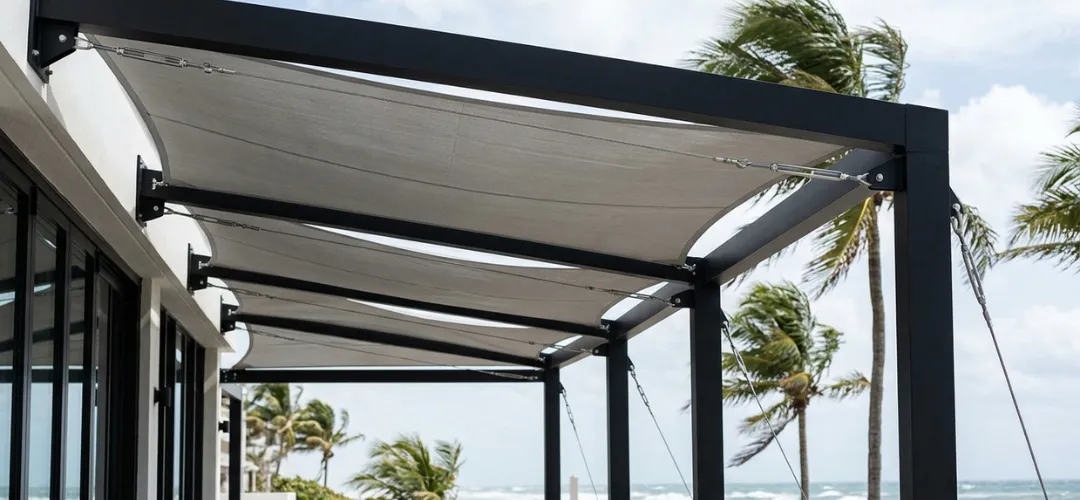
6. Wind Resistance Rating and Built-In Safety Features
Some awning units are built to handle a gentle summer breeze, while others can take a serious storm. Cheaper retail store models rarely feature an official wind rating, meaning they are a gamble the second the weather turns ugly.
A professional-grade unit comes with a certified wind class rating, often proving it can handle winds up to 20 or 30 miles per hour without taking damage.
For the ultimate piece of mind, look for smart automated features. A built-in motion sensor can detect when the frame starts shaking too violently from wind gusts. The system then automatically triggers the motor to roll the fabric up safely before any damage can occur, protecting your investment even when you are away from home.
7. Coating and Finish: Powder Coating vs. Liquid Paint
The metal frame needs protection just as much as the fabric does. Cheap models use standard spray paint or basic liquid finishes that chip off the moment a stray tree branch taps the frame. Once the bare metal meets the air, moisture creeps in and starts the destruction process.
Top-tier frames undergo a detailed multi-stage powder coating process. The protective powder is electrostatically charged onto the aluminum and baked in an industrial oven to create a hard, thick, plastic-like shield.
This advanced finish is highly resistant to scratching, color fading from the sun, and salt-air corrosion if you live near the coast. It keeps the framework looking pristine and working smoothly without sticking or squeaking for decades.
Time to Make Your Choice
When it comes to shade, you truly get what you pay for. Avoiding a rusted, saggy mess means ignoring the cheap price tags and focusing on what matters under the hood. By choosing thick aluminum frames, solution-dyed fabrics, and heavy-duty hardware, you guarantee a beautiful, long-lasting patio canopy that lasts 15 years instead of just 3.
If you want to skip the guesswork and make sure you get an awning that lasts, The Awning Cleaners can help. We specialize in premium Awning Making Services, creating custom setups that maximize your outdoor comfort, shield you from harsh weather, and look fantastic on your property.
Frequently Asked Questions
What determines how long a patio awning will last?
The biggest factors are frame strength, fabric quality, installation hardware, and weather resistance, all of which directly affect durability and overall awning lifespan.
Which fabric is best for long-lasting outdoor canopy use?
Solution-dyed acrylic performs best because it resists UV fading, repels moisture, and maintains structure far longer than standard polyester materials.
Why do some awnings sag or tear within a few years?
Poor arm tension systems, weak stitching, and low-grade fabrics often lead to sagging, water pooling, and premature fabric failure over time.
How important is the frame material in awning durability?
Very important. Powder-coated aluminum frames last much longer since they resist rust, handle wind better, and maintain structural stability for years.
Can wind damage be prevented in patio awnings?
Yes, choosing wind-rated systems with strong brackets and automatic retraction features greatly reduces the risk of storm or gust-related damage.