You step outside on a sunny Saturday morning, coffee in hand, ready to enjoy your patio. But something looks off. Your awning is drooping in the middle like a tired shoulder. Water from last night’s rain is still sitting there in a heavy pool, and you find yourself asking the same question homeowners everywhere have asked: why is my awning sagging?
Here is the thing. You are not alone in wondering what causes awning sagging and how repairs can fix it without costing a fortune. Most people assume a sagging awning means full replacement. But that is rarely true. The fabric, the arms, the springs, they can almost always be brought back to life.
In this blog, we will walk through exactly why awnings lose their tension, which fixes actually work, and when you finally need to call in help for awning repair. No guesswork. Just answers that keep your shade where it belongs.
Why Is Your Awning Sagging?
Let us start with the obvious question you came here to answer.
Why is my awning sagging? The short version is this: your awning lost the battle between tension and gravity. Every awning, whether fixed or retractable, relies on a careful balance. The fabric needs to stay stretched. The frame needs to stay straight. The springs, if you have a retractable model, need to keep pulling everything tight. When any part of that balance breaks, you get droop.
Think of it like an old t-shirt that has been washed too many times. The collar loosens and the fabric no longer snaps back. That is exactly what happens with awning fabric sagging over months of sun, rain, and wind. But here is the good news. Most awning problems are not fatal. They are mechanical. And mechanical things can be adjusted, tightened, or realigned without ripping the whole thing off your house.
In the next section, we will break down exactly what causes the looseness so you know which fix applies to your situation.
What Causes Awning to Sag Over Time?
Let us get specific. You cannot fix something until you know why it broke in the first place.
Water Pooling and Rain Damage
You see that dip in the middle of your awning after a storm? That is not just annoying. That is weight. A single gallon of water weighs over eight pounds. Now imagine a heavy summer downpour dumping ten or fifteen gallons onto your fabric because the pitch was too flat to let it run off. That is how awning damage starts. The fabric stretches. The seams groan. And over time, that stretch becomes permanent.
Wind Stress and Fabric Strain
The wind does not hit your awning like a polite guest. It grabs it. It whips it. It yanks the fabric in directions it was never designed to go. One strong gust can overextend a retractable arm. Repeated gusts loosen every joint and bracket holding the whole thing together. Before you know it, your once straight shade now looks like it is waving at the neighbors.
Weak Spring Tension (Retractable Systems)
If you have a retractable awning, the magic happens inside that roller tube. Springs keep the fabric tight. They provide the snap when you open it and the control when you close it. But springs get tired. After a few years of expanding and contracting, they lose their grip. That leads to classic retractable awning problems like fabric that hangs loose even when fully extended or an awning that refuses to roll up all the way. The spring is still there. It is just not springing like it used to.
Improper Installation or Misalignment
Here is a hard truth. Some awnings sag the day they are installed. Not because of bad parts, but because someone rushed the job. Brackets mounted unevenly. Pitch set too flat. Arms that are not parallel. These small mistakes create uneven tension across the fabric. One side pulls tighter than the other. The loose side sags. And that sag gets worse with every rainstorm and every gust of wind.
Fabric Aging and Material Wear
Nothing lasts forever. Sun breaks down polyester and acrylic. UV rays fade the color first, then weaken the fibers. Rain and humidity invite mildew that eats away at thread and seams. This is what causes awning fabric to loosen naturally over five, seven, or ten years. The material stretches. It loses its original shape. And no amount of tightening can fully reverse decades of weather exposure. At that point, you are not looking at an awning repair. You are looking at new fabric.
How to Fix a Sagging Awning Without Replacing It
Now for the part you actually want. The fixes. No replacement needed. Just your hands, a few basic tools, and about an hour of your weekend.
Before you do anything, ask yourself this: can a sagging awning be repaired? In most cases, yes. Absolutely. The only time you cannot is when the fabric is torn beyond patching or the frame is bent like a pretzel. Everything else? Adjustable.
Adjusting Awning Tension
Let us start with the most common fix. The answer to how to tighten a sagging awning depends on whether yours is retractable or fixed.
For retractable awnings, fully extend the unit. Look at the roller tube. Is the fabric wrapping over the top of the tube or spooling underneath? It should go over the top. If it is rolling under, you have a reverse roll situation. You can fix that by fully extending, removing the fabric from the roller, and rerolling it correctly. Sounds fussy. It works.
For fixed awnings, tension is usually adjusted at the arms. Look for adjustment screws or bolts where the arm meets the wall bracket. A few turns can pull everything tighter. Go slowly. Quarter turns only. Then check the fabric.
Fixing Water Pooling Issues
Water pooling is not just a sagging problem. It is a future collapse problem. The fix is simple. Change the pitch.
Most retractable awnings let you adjust the angle of the arms. Lower the front edge by one or two notches. That is usually enough for rainwater to run straight off instead of sitting there like a kiddie pool. For fixed awnings, you may need to relocate the mounting brackets or add spacers to create slope. If that sounds like too much, a sagging awning fix that works immediately is installing a center support pole. Just remember that this is a temporary solution. Pitch adjustment is the real answer.
Temporary Reinforcement Methods
Sometimes you need the awning to stop sagging right now because guests are coming over in an hour. Fine. Here are two band aid fixes that buy you time.
Run a taut rope or ratchet strap from the outer edge of the awning down to a ground anchor or heavy planter. That pulls the fabric tight and stops the droop instantly. Ugly? Yes. Effective? Also yes.
Alternatively, slide a pool noodle or a length of PVC pipe under the fabric across the width of the awning. It creates a ridge that breaks up water pooling and supports the sagging section. Neither of these is a permanent repair. But they will get you through the weekend until you can do the real work.
Using Awning Repair Tape for Minor Damage
What if the sag is coming from a small tear or a seam that has let go? That is where awning repair tape becomes your best friend.
Clean the area with rubbing alcohol. Let it dry completely. Cut a piece of repair tape that extends at least an inch past the tear on all sides. Round the corners so the tape does not peel up later. Press firmly. Smooth out any bubbles. That repair can hold for months or even years on a small puncture or seam split. It is not pretty up close, but neither is a sagging awning. And it keeps water from making the tear worse.
When None of That Works
If you have tried tension adjustment, pitch changes, and repair tape, and your awning still looks like a sad hammock, you may be looking at it as a whole unit but still needing new fabric or new springs. Those are component level repairs. Doable. But they require ordering specific parts from the manufacturer. At that point, you have to decide whether your time is worth more than a professional visit.
How to Prevent Awning Sagging in the Future
You fixed the sag. Good. Now let us make sure you never have to do it again.
Here is what actually works to stop awning sagging from coming back:
- Change the pitch before every storm season. A steeper angle means water runs off instead of pooling. That one habit prevents more sagging awning repair calls than anything else.
- Retract your awning when the wind picks up. Even a light breeze puts stress on fabric and arms. If you hear flapping, roll it in. The future you will thank you.
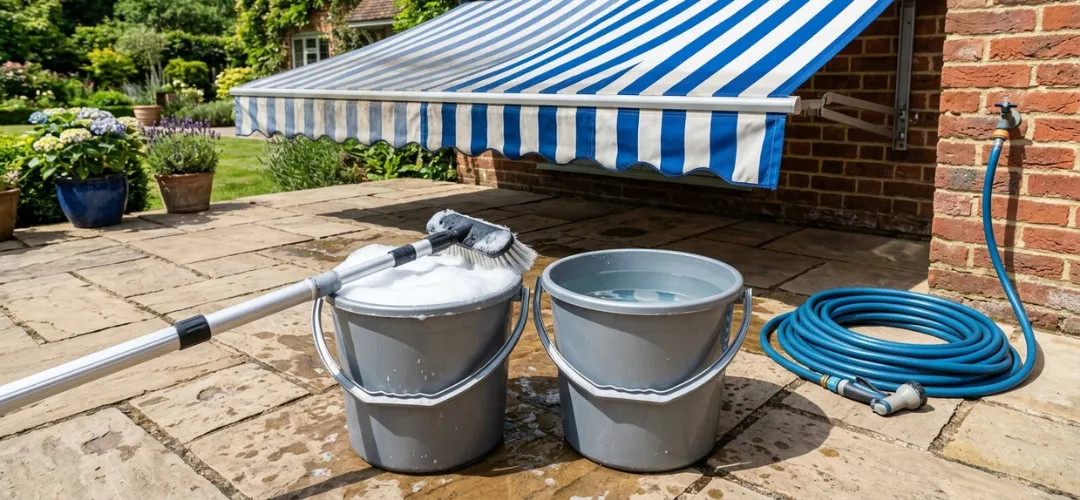
- Clean the fabric twice a year. Dirt and mildew hold moisture against the material, speeding up rot and stretch. Mild soap, soft brush, rinse well.
- Lubricate moving parts every spring. Hinges, arm joints, and roller mechanisms. A little silicone spray keeps everything moving smoothly so springs do not have to overwork.
- Inspect after every heavy rain. Walk outside, look for new dips or pools, and catch small sags before they become permanent.
- Tighten mounting bolts annually. Vibration from wind and use loosens brackets over time. A quarter turn on each bolt keeps tension even across the whole unit.
Most of the time what causes awning to sag over time is not one big disaster. It is small neglects stacking up. Do these six things and your awning stays tight for years.
Your Awning Shouldn’t Look Tired
How do you fix a sagging awning? You start by finding the real cause. Water pooling, weak springs, wind stress, or just fabric getting old. Then you adjust the pitch, tighten the tension, patch small tears with repair tape, or realign the arms. Most sagging awnings never need full replacement. Just an hour of smart work and knowing which fix fits which problem.
That said, not everyone has the time or the ladder. If your awning still droops after trying the steps above, or if you would rather spend your weekend doing anything else, that is where we come in. The Awning Cleaners provides professional awning repair services that get your sagging awning back in shape fast. No guesswork. No borrowed tools. Just your shade looking right again.
Frequently Asked Questions
1. Can a sagging awning be repaired?
Yes, most sagging awnings can be repaired by adjusting tension, fixing the pitch, or replacing worn parts like springs or fabric.
2. What causes awning sagging in the first place?
Common causes include water pooling, wind stress, weak spring tension, poor installation, and natural fabric wear over time.
3. How do you fix a sagging awning without replacing it?
You can tighten the fabric, adjust the angle to improve drainage, or repair small damage using awning repair tape.
4. How to tighten a sagging awning?
For retractable awnings, adjust spring tension or re-roll the fabric correctly. For fixed ones, tighten arm brackets or mounting bolts.
5. When should I call for awning repair near me?
If the awning still sags after basic adjustments or has damaged fabric, bent arms, or weak springs, professional repair is needed.