You glance up at your awning and see greenish spots near the edges and dark streaks across the fabric. It clearly needs attention, but a question stops you cold. Is now the right time to clean your awning, or will you end up doing more harm than good by scrubbing at the wrong moment?
The truth is that cleaning at the wrong time of year can actually damage your awning instead of helping it. Scrub on a blazing hot day and the soap dries before you can rinse it properly. Clean right before winter and trapped moisture turns into mold that eats through the fabric. That is why a simple awning cleaning schedule is so important.
So what is the best thing to clean an awning and when should you actually do it? The answer is two seasons per year, spring and fall. That simple rhythm keeps your fabric looking good and your awning maintenance costs low.
The Best Time of Year – Spring and Fall (And Why)
The question of the best time of year to clean fabric awnings has a simple answer. Twice annually, once in spring and once in fall. These two seasons offer the perfect balance of weather conditions and practical timing for seasonal awning care.
Spring Awning Cleaning
Spring cleaning is your fresh start. After months of winter moisture, snow, and freezing temperatures, your awning needs attention. A thorough spring cleaning removes the grime that accumulated while your awning was stored or rarely used. It also prepares the fabric for the harsh summer sun ahead, giving you a clean surface that reflects UV rays better and resists heat damage.
Fall Awning Cleaning
Fall cleaning is equally important. Summer brings pollen, bird droppings, tree sap, and dust that all embed themselves into the fabric over months of use. If you roll up your awning for winter without cleaning it first, all that organic material gets trapped inside. Trapped moisture leads to mold, and mold destroys fabric. A fall cleaning removes summer debris before winter storage, which directly helps extend awning lifespan by years.
Should You Clean Awnings in Summer or Winter
Here is a question that pops up every year. Can you clean awnings in winter? Or should you wait for summer heat to help things dry faster? The short answer is neither is ideal, but sometimes you have to work with what you have.
Cleaning Your Awning in Summer
Summer heat sounds helpful until you try it. Soap dries onto the fabric before you can rinse it off, leaving white streaks that look worse than the dirt you started with. And standing on a ladder in July heat scrubbing fabric? Not exactly fun. Winter brings its own problems. Cold water does not clean as well, and if temperatures drop below freezing, that water turns to ice inside your fabric seams. Ice expands. Seams split.
Cleaning Your Awning in Winter
Can you clean awnings in winter? Yes, but only on dry days when the temperature is above freezing. Pick a sunny afternoon, use lukewarm water, and make absolutely sure the fabric dries completely before you roll it up. If you cannot guarantee that, wait for spring. Afterall, a little dirt is better than a frozen, cracked awning.
What You Need to Clean Your Awning the Right Way
Before you start scrubbing, grab the right tools. Using the wrong stuff is the fastest way to ruin good fabric.
What you will need
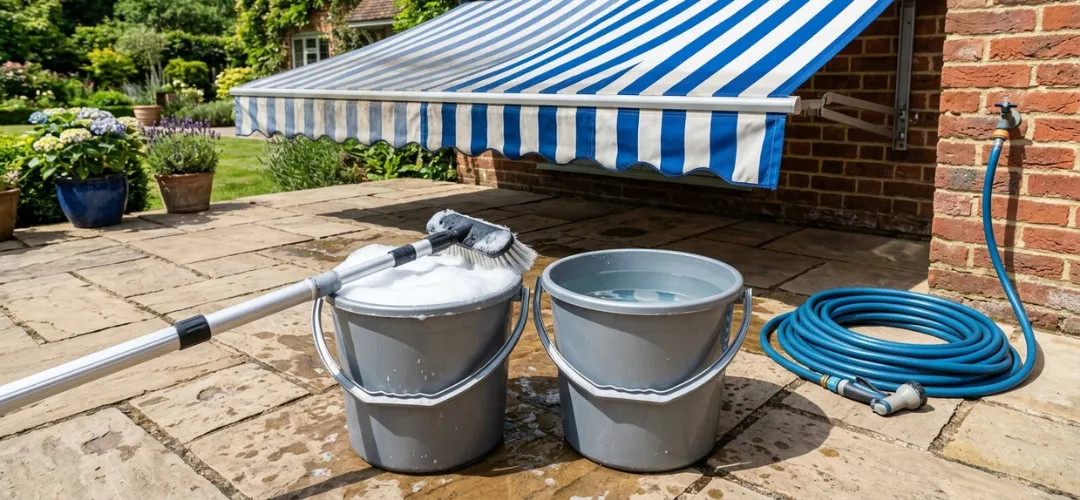
- Soft bristle brush (nothing stiff, nothing metal)
- Garden hose with a spray nozzle
- Two buckets (one for soapy water, one for rinsing)
- Mild dish soap or a dedicated fabric cleaner
- Soft cloth or sponge
- Ladder (if your awning is out of reach)
What can I use to clean awnings? The safest answer is mild dish soap mixed with lukewarm water. That is it. No bleach, no degreasers, no heavy detergents. Those strip away the waterproof coating and fade the color.
Since you know what you should use, it is equally important to know the other way around. Here is what you should never use.
- Bleach: Bleach destroys fabric fibers and turns your awning into a splotchy mess.
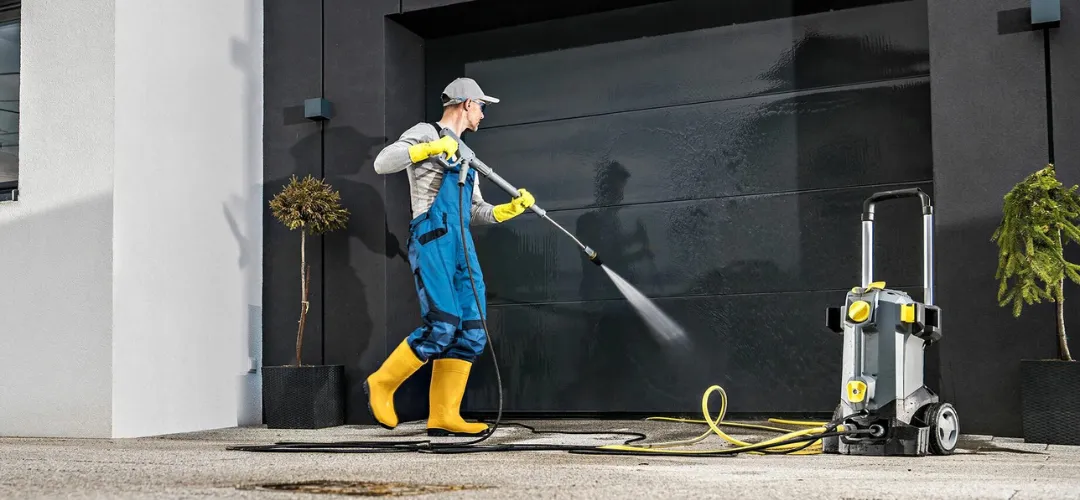
- Pressure Washer: Pressure washers blast water through the seams and leave permanent streaks.
- Harsh Chemicals: Harsh chemicals like acetone or degreasers eat right through the protective layer.
- Sponges: Those magic eraser sponges? They are basically fine sandpaper. They scrub the dirt off by scrubbing the fabric off along with it.
Awning cleaning products that are actually safe include specialty fabric cleaners from brands like Sunbrella or 303. They cost more than dish soap but come with specific instructions for your fabric type. If you have an expensive awning, spend the extra few dollars.
Step-by-Step – How to Clean Your Awning for Maximum Lifespan
Now for the part you actually need. A simple, repeatable process that gets the job done without wrecking your fabric.
Step 1: Brush off loose dirt
Before any water touches your awning, sweep off leaves, twigs, bird droppings, and loose dust. A soft broom or a dry soft bristle brush works fine. Skipping this step turns loose dirt into wet mud that smears everywhere.
Step 2: Hose it down
Use a garden hose with a spray nozzle. Start from the top and work your way down. Wet the entire surface thoroughly. This loosens stuck-on grime before you start scrubbing.
Step 3: Mix your cleaning solution
Fill a bucket with lukewarm water and add a few drops of mild dish soap. That is it. No measuring cups, no complicated ratios. Just soapy water.
Step 4: Scrub gently
Dip your soft bristle brush into the soapy water and start scrubbing from the bottom up. Yes, bottom to top. This keeps dirty water from running down onto clean sections you already did. Use light pressure, let the soap do the work.
Step 5: Rinse thoroughly
Switch back to the hose and rinse from the top down. Make sure every bit of soap is gone. Leftover soap attracts dirt and leaves streaks.
Step 6: Let it dry completely
This is the step everyone messes up. Do not roll up your awning until the fabric is bone dry. Wet fabric rolled up grows mold. Mold ruins fabric. Wait a few hours, or come back the next day. Patience here saves you from replacing the whole thing.
Awning cleaning tips that actually work come down to one rule. Never rush the drying step.
Seasonal Awning Care Beyond Cleaning
A clean awning is great. But awning cleaning and maintenance goes beyond just washing the fabric. What you do between cleanings matters just as much.
Signs your awning needs cleaning between your scheduled twice yearly washes are easy to spot. Green or black spots, musty smells, water soaking through instead of beading up, or fabric that feels stiff and crunchy. If you see any of those, clean it immediately. Do not wait for the calendar.
Spring (after your first clean)
Inspect for winter damage. Look for small tears, loose stitching, or rust spots on the frame. Catch these now before they turn into expensive problems. Lubricate any moving parts with silicone spray. Do not use oil based lubricants, they attract dirt and gum up the works.
Summer (during peak use)
Give your awning a quick rinse once a month with just the hose. No soap needed unless it is visibly dirty. This stops dirt from building up and bedding into the fabric. Also, retract your awning during storms. High winds and heavy rain are the fastest way to bend a frame or tear a seam.
Fall (before winter storage)
This is your deep clean, which you already know about. But also check for any damage that happened during summer. Fix small tears with a fabric repair kit now, not in spring when the tear has doubled in size.
Winter (during storage)
If you store your awning rolled up, check on it once a month. Look for signs of pests, moisture, or mold. A quick peek can save you from discovering a ruined awning when you roll it out next spring.
When to Call an Awning Cleaning Company
You can handle routine cleaning yourself. But there comes a point where DIY is not enough.
The best time to clean awnings twice a year works for most homeowners. But if you have let your awning go for years without attention, or if you tried cleaning it yourself and the stains did not budge, it might be time to call in backup.
Professional awning cleaning services use commercial grade equipment and products that are not available at the hardware store. They know how to treat different fabric types, remove stubborn mildew without bleach, and clean without damaging seams or waterproof coatings. They also have the ladders and safety gear to reach high installations that you should not be climbing.
So if the answer to “when did you last clean your awning” is “I cannot remember” or “never”, and your fabric is green with mold or stiff with embedded grime, hire a pro. The cost of a professional clean is much less than the cost of replacing the entire awning.
Clean It or Call Us
So here’s what it all comes down to.
Clean your awning twice a year, once in spring and once in fall. Use mild dish soap, a soft brush, and a garden hose. Never use bleach or a pressure washer. Let the fabric dry completely before rolling it up. That simple schedule prevents mold, removes grime, and adds years to your awning’s life.
If your awning already looks rough or you have fallen behind on maintenance, let the pros handle it. Awning Cleaners specializes in awning cleaning services designed to make awnings look new again. We remove grime, mildew, and weather damage using low-pressure cleaning and non-toxic detergents that protect delicate fabrics.
Frequently Asked Questions
1. What is the best thing to clean an awning?
The safest option is mild dish soap mixed with lukewarm water. It cleans effectively without damaging the fabric or stripping protective coatings.
2. How often should you clean your awning?
Ideally, twice a year. Once in spring and once in fall. Additional light rinsing during summer helps prevent buildup.
3. Can you pressure wash an awning?
No, pressure washing can damage fabric, weaken seams, and remove protective coatings. Always use a soft brush and low-pressure water.
4. What are the signs your awning needs cleaning?
Look for green or black spots, musty odors, visible stains, or water soaking into the fabric instead of beading up.
5. Can you clean awnings in winter?
Yes, but only on dry days above freezing temperatures. Make sure the awning dries completely to avoid mold or fabric damage.