
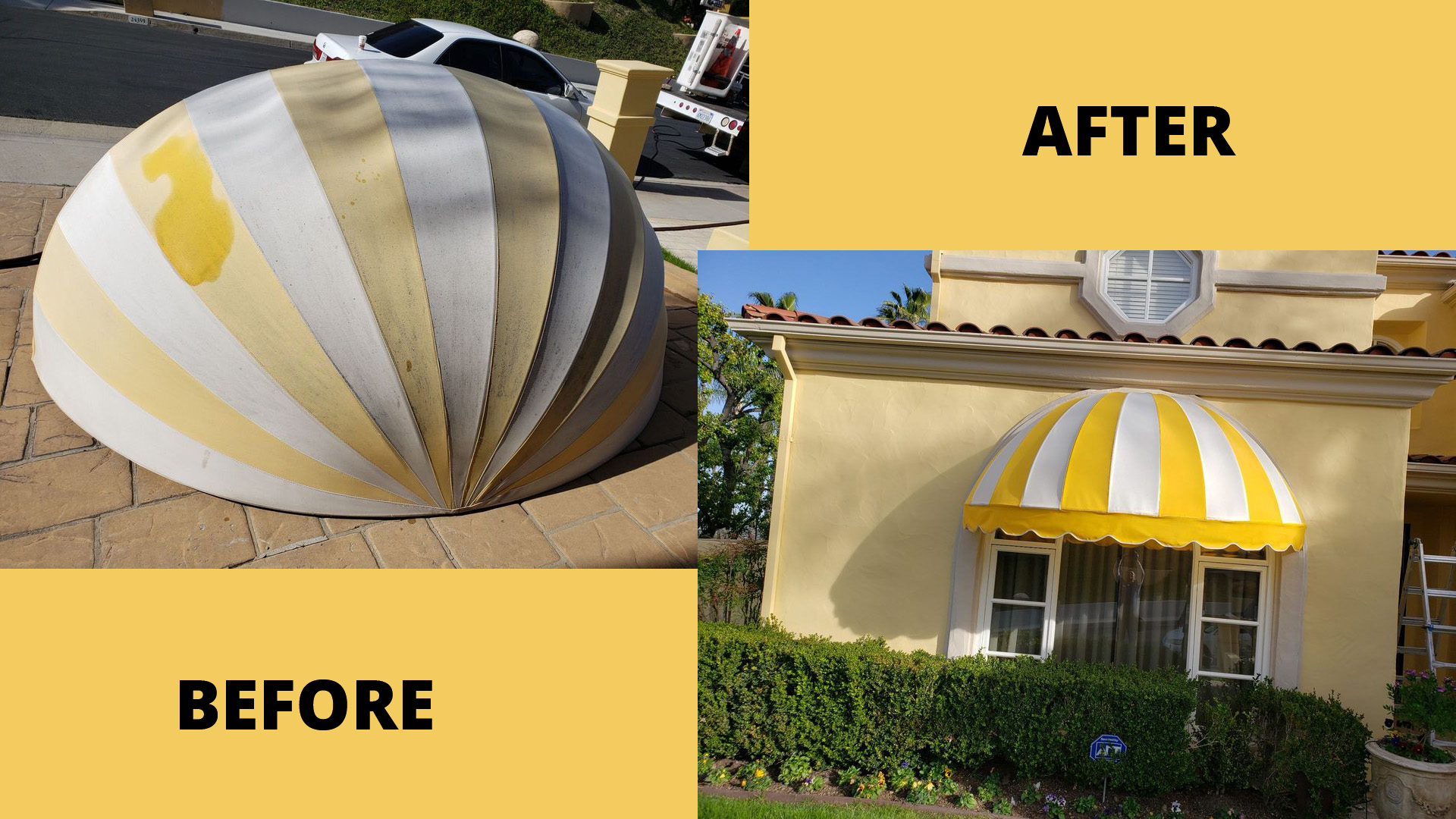
Deep awning cleaning does more than remove surface dirt. Clean fabric looks brighter, feels fresher, and also helps protect the structure underneath. Mold and mildew slowly stain the surface, and moisture weakens fibers over time. Because of this, regular deep cleaning becomes one of the best ways to keep fabric healthy and attractive.
Outdoor awnings sit through rain, shade, dust, pollen, and constant humidity. Over time, these layers settle in and begin forming dark patches. The fabric loses its original color, and the space under the awning can even start to smell musty. You should stay ahead of this buildup, because early cleaning keeps everything easier and safer to manage.
Deep cleaning reaches into the fabric instead of only wiping the surface. Stains lift away more fully, and air begins to flow through the material again. In addition, careful cleaning helps stop mold spores from spreading, so the fabric stays stronger for longer.
This guide walks through clear, practical awning cleaning steps that actually work. You will learn how to loosen grime gently, how to wash without damaging the fibers, and how to prevent mold from returning. In the end, the fabric looks brighter, lasts longer, and turns the outdoor area into a cleaner, more pleasant space.
Deep cleaning removes layers of dirt, mold film, and stains, and the fabric slowly shows its real color again. You should work gently, because harsh scrubbing can weaken fibers. In addition, deep cleaning helps fabric look newer, so outdoor spaces feel cleaner and more welcoming.
Mold and grime slowly damage threads, and they also shorten fabric life. Deep cleaning helps remove these layers, therefore the material stays stronger. You should build cleaning into your routine, since small steps protect the awning for the long term.
Dirty awnings can hold musty smells, and they sometimes allow mold spores to spread. Deep cleaning reduces this buildup, so the air around the awning feels fresher. Moreover, the entire area becomes more comfortable to sit under.
Mold often appears as dark, uneven patches that keep growing. You should watch areas near seams and shaded corners, because moisture collects there first. In addition, the fabric may start losing brightness as mold expands.
Mildew usually brings a strong, damp smell. It becomes noticeable on humid days, and it can linger even after light cleaning. You should take this as an early warning sign, so deeper cleaning can begin sooner.
Light wiping sometimes removes only surface buildup, and the stain slowly returns. This means mold has reached deeper layers. You should move to deeper cleaning methods, because surface wiping alone will not fix the problem.
Rain, morning dew, and humidity leave moisture sitting on the surface. Mold grows faster in damp areas, and shade keeps the water from drying. You should allow airflow and sunlight whenever possible, so the fabric stays drier.
Dust, pollen, and outdoor grime settle into fabric fibers, and mold uses this buildup like food. In addition, dirt traps moisture, so the surface stays wet longer. You should rinse the awning regularly, because cleaner fabric resists mold better.
Still air creates the perfect environment for mildew. Corners near walls or trees dry more slowly, and moisture stays trapped. You should trim nearby branches and keep space open, so air can move freely and help with drying.
Good cleaning starts with gentle preparation, and it helps prevent accidental tears or discoloration. Loose dirt should be removed first, so chemicals do not grind into the fabric. You should move slowly at this stage, because careful prep keeps the material safer during deep cleaning.
Key points
Right tools make cleaning smoother, and they also protect the fabric from harsh scrubbing. Simple, gentle items usually work best, because heavy tools can cause damage. You should gather everything before starting, so the process stays calm and organized.
Key points
Light rinsing helps lift dirt and pollen before scrubbing begins. You should go slow, because strong pressure can push water into seams. In addition, rinsing first keeps cleaning solutions from grinding grit into the fabric.
Gentle brushing allows the cleaner to soak into the fibers instead of tearing them. You should move in small circles, and avoid pressing too hard. Moreover, steady motion helps stains release more easily.
Cleaning solutions need a few minutes to lift grime properly. You should allow the product to sit briefly, so stains soften and rise to the surface. In addition, patience reduces the need for aggressive scrubbing.
Leftover cleaner can attract dirt later. You should rinse carefully until water runs clear, therefore the fabric stays brighter and feels cleaner longer.
Simple soap and warm water often handle early mold growth. You should mix gently and avoid heavy suds, because thick foam can be hard to rinse. Moreover, this option stays safer for most fabrics.
White vinegar helps slow mold growth and loosen stains. You should apply it carefully, and let it sit for a short time. In addition, the smell fades as the fabric dries.
Baking soda helps reduce musty smells and light surface marks. You should sprinkle lightly or mix into a paste. Therefore the fabric feels fresher after rinsing.
Natural products still leave residue if they stay behind. You should rinse fully, so the surface dries clean and smooth.
Some products are designed specifically for awnings and outdoor textiles. You should read labels carefully, because the right cleaner protects fibers while tackling mold. In addition, fabric-safe formulas reduce fading risk.
Small tests help prevent surprises. You should try cleaner on a hidden corner first, so any reaction shows up safely. Moreover, it builds confidence before larger cleaning work begins.
Manufacturers give instructions for dilution and timing. You should follow them closely, because stronger mixes can damage fabric. In addition, correct use usually delivers better cleaning power.
Commercial cleaners often leave film if not rinsed properly. You should wash them off completely, therefore the awning stays brighter and more comfortable to use.
Some stains sink deeper into the fabric, and they stay even after normal cleaning. Mold shadows, bird droppings, tree sap, and deep dirt all need extra patience. You should take your time, because slow cleaning protects the fabric, and tougher marks still lift gradually. Moreover, stronger spots often fade in stages instead of disappearing at once.
Key points
Wet fabric holds moisture inside, and mold forms faster. You should let the fabric dry completely, so air can move across the surface. In addition, full drying helps colors stay clearer and brighter.
Strong heat can weaken fibers and fade color. Gentle airflow works better, and it also protects the material. You should open the awning fully, therefore breeze and sunlight can dry it more evenly.
Low dips collect water, and stains form again. Slight adjustments help moisture slide off, and the fabric dries faster. Moreover, less standing water means fewer mold problems later.
Quick rinsing removes pollen and dirt before they settle. You should do this regularly, because simple maintenance stops mold from having anything to feed on. In addition, the fabric stays fresher longer.
Tight corners trap moisture. Space around the awning encourages airflow, and drying happens faster. You should trim nearby branches, so air can circulate freely and reduce damp spots.
Tiny marks grow into bigger stains if ignored. Early cleaning keeps problems small, and it also protects the fabric from deeper damage. Moreover, staying consistent helps the awning look cleaner every season.
Some cleaning habits feel helpful at first, and they actually cause harm over time. Strong scrubbing, harsh chemicals, and rushed drying all weaken the fabric slowly. You should stay patient, because gentle methods protect both color and strength. Moreover, smart care saves money, since the awning lasts much longer.
Key points
Clean awning fabric changes the whole look of an outdoor space, and it also supports longer fabric life. You should think of cleaning as regular care, not a one time job, because mold, dust, and moisture keep coming back. In addition, gentle deep cleaning protects color, threads, and stitching, so the awning stays stronger through every season.
Small steps make a big difference. You should rinse lightly, wash carefully, dry fully, and stay alert to early stains. Moreover, choosing safer cleaners and patient methods keeps the job simple instead of stressful. In fact, consistent care helps avoid expensive replacements later.
The goal is a bright, fresh, and welcoming awning that feels pleasant to sit under. You should start with a simple routine, then add deeper cleaning as needed. With steady attention, the fabric stays clearer, mold stays under control, and the outdoor area looks beautifully maintained.
Deep cleaning works best two times a year, and light cleaning in between helps a lot. Regular care keeps mold, stains, and dust from settling deeper into the fabric.
Yes, most mold can be cleaned safely with gentle methods. Mild soap, vinegar solutions, and fabric safe cleaners work well, and strong chemicals should be avoided.
Pressure washing is risky for fabric. Water can get pushed into seams and fibers can tear. You should use a soft brush, mild cleaner, and gentle hose rinsing instead.
Good airflow, regular rinsing, and full drying help prevent mold. You should remove dirt and pollen often, because mold grows faster on dirty surfaces.